
Most people know that clogged arteries can cause a heart attack. Far fewer know that the same process happens in the legs. It is called peripheral artery disease (PAD), and it is one of the most underdiagnosed serious conditions we see. Left alone, it can progress silently from mild cramping to tissue loss and amputation. Caught early, it is very treatable.
What is peripheral artery disease?
Your leg muscles and skin are fed by a network of arteries running from the abdomen down to the toes. Over years, cholesterol, calcium and scar tissue can build up inside these vessels, a process called atherosclerosis. The channel narrows, blood flow drops, and the tissues downstream slowly starve of oxygen.
When a narrowing becomes severe, or a clot forms on top of it, blood supply can fall below what the limb needs even at rest. Doctors call this critical limb ischemia. At that stage the foot may become painful at night, cold, pale or dark, and wounds stop healing. In the most advanced form, tissue dies and turns black, which is known as gangrene. This is a medical emergency: without restoring blood flow, the choice can come down to amputation.
The warning signs
PAD symptoms are easy to dismiss as "getting older" or "a pulled muscle." Take these seriously:
- Cramping when you walk that eases when you rest. Usually in the calf, thigh or buttock. This pattern, called claudication, is the classic early sign.
- Foot or toe pain at night that improves when you hang the leg off the bed.
- One foot colder than the other, or skin that looks pale, shiny or bluish.
- Sores or cuts on the feet that will not heal after weeks.
- Weak or absent pulses in the foot, often found during a medical exam.
- Darkening skin on a toe or the foot. This is late and urgent. Seek care immediately.
Image: James Heilman, MD, "GangreneFoot", licensed under CC BY-SA 3.0, via Wikimedia Commons. Labels added.
Who is at risk?
PAD shares its causes with heart disease, and both are common in Trinidad and Tobago:
- Diabetes, the single biggest driver of PAD and amputation in the Caribbean
- Smoking, which damages the artery lining and speeds up blockage
- High blood pressure and high cholesterol
- Age over 50, with risk climbing every decade
- Kidney disease and a family history of heart or vascular disease
Importantly, PAD is rarely a leg problem alone. The same blockages tend to exist in the arteries of the heart and neck. Finding PAD is a signal to check the whole cardiovascular system, which is why a heart assessment often goes hand in hand with a leg circulation workup.
How PAD is diagnosed
Diagnosis starts simply: your doctor feels the pulses in your legs and feet and compares blood pressure readings between arms and ankles. When disease is suspected, imaging maps exactly where the blockages are:
- Doppler ultrasound listens to the character of blood flow in each artery segment.
- CT angiography uses a CT scan with contrast dye to produce a detailed picture of every artery from the abdomen to the feet, showing precisely which segments are narrowed or blocked and how bad each blockage is. This is the roadmap that guides treatment.
- Echocardiography and cardiac assessment check the heart before any procedure, since PAD and heart disease so often travel together.
How PAD is treated
1. Protect the arteries you have
For early PAD, the foundation is stopping the disease from advancing: quitting smoking, controlling blood sugar and blood pressure, cholesterol-lowering medication, antiplatelet therapy where indicated, and a structured walking programme, which genuinely builds new collateral blood flow over time.
2. Reopen blocked arteries without open surgery
Modern vascular care can often restore blood flow through a needle puncture rather than a large incision. In a balloon angioplasty, a thin wire is guided through the artery to the blockage, a small balloon is inflated to reopen the channel, and a stent can be placed to hold it open. Patients are typically sedated but not under general anesthesia, and many feel the difference in the limb, warmth and a returning pulse, almost immediately.
3. Surgical bypass
For long or complex blockages, surgeons can route blood around the diseased segment using a graft, like a detour around a blocked road. The right choice between angioplasty and bypass depends on where the blockages sit, how long they are, and the patient's overall fitness, especially heart health.
4. When tissue has already died
If gangrene is established, restoring blood flow remains the priority, because good circulation determines how much of the limb can heal and how low an amputation, if one is needed at all, can be. Infection control, wound care and cardiac protection run alongside. This is multidisciplinary medicine: vascular specialists, cardiology, anesthesia and nursing working as one team.
The takeaway
Leg cramps on walking, night foot pain, non-healing sores and cold feet are not normal aging. They are your circulation asking for help. PAD found early is managed with medication and lifestyle change. PAD found late can still be treated, often with remarkable results, but the window matters. If anything in this article sounds like you or someone you love, especially if you are diabetic or a smoker over 50, get your circulation checked.
This surgery happens right here at Newtown
The photographs below show our surgical team performing limb-saving bypass surgery at Newtown Medical Centre on an elderly diabetic patient. She presented with pain and ischemic toes, and a CT angiogram done at NMC demonstrated significant atherosclerotic disease and arterial blockages. A bypass was performed to carry blood around the blocked arteries and restore flow to the foot, the same pathway described in this article: recognise the symptoms, map the arteries, restore the blood supply.
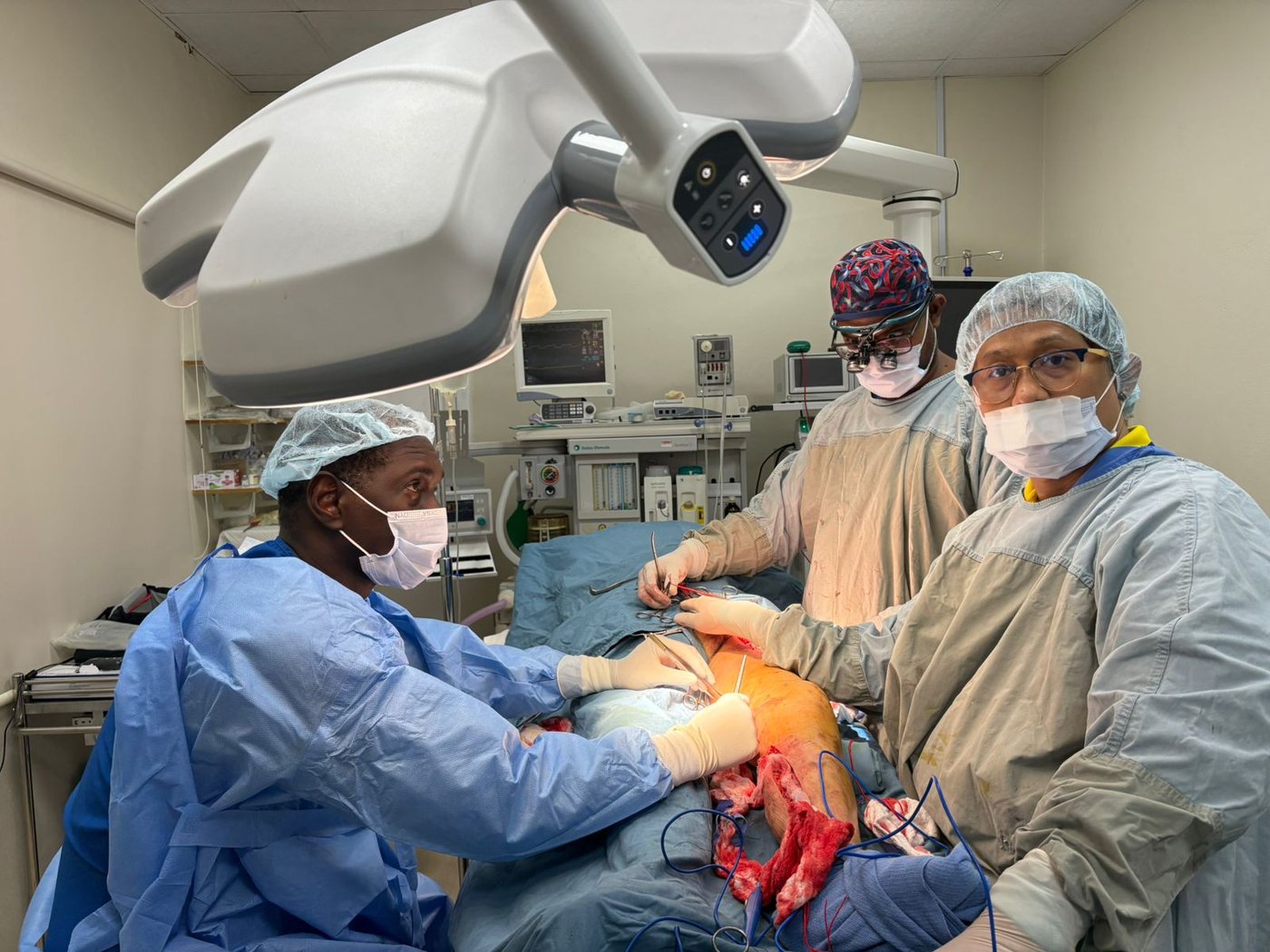
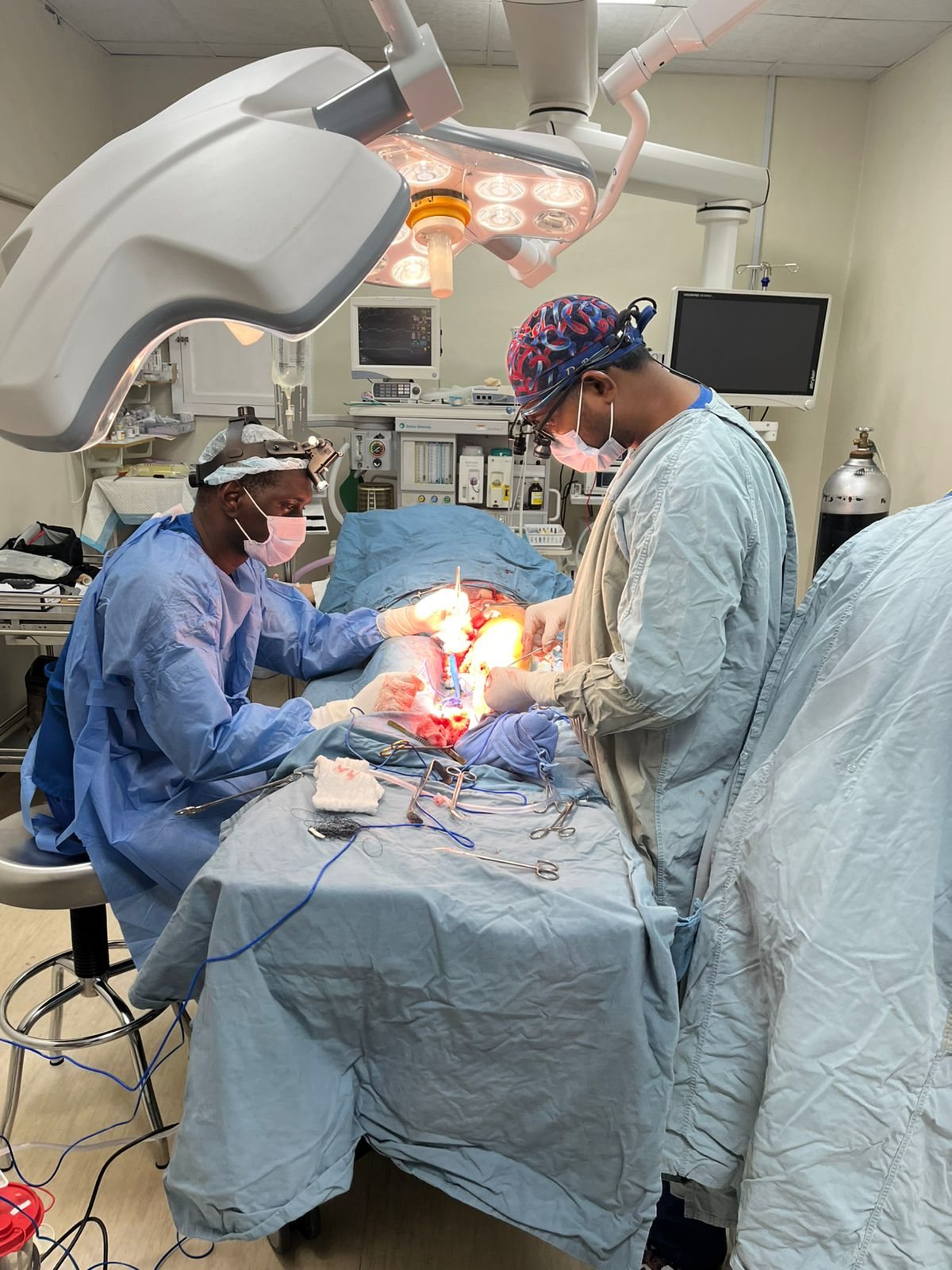
Our vascular surgical team in theatre at 55 Woodford Street, Port of Spain. Patient details are never shared; images published with care to protect privacy.
Worried about your circulation? Get checked at Newtown.
Everything described in this article, the vascular consultation, Doppler studies, CT angiography, echocardiogram and laboratory workup, is done under one roof at 55 Woodford Street, Port of Spain. Book a consultation and our doctors will assess your circulation and arrange your CT angiogram if you need one. Walk-ins welcome, and our Accident and Emergency department is open 24 hours.
This article is for general education only and is not a substitute for personal medical advice, diagnosis or treatment. Always consult a qualified healthcare provider about your own health. If you believe you have a medical emergency, call or visit our 24-hour Accident and Emergency department immediately.